Ezra
- Zerubbabel leads first return (Ezra 1–6)
- Ezra leads second return of exiles (Ezra 7–10)
Nehemiah
- Nehemiahs first visit to Jerusalem (Nehemiah 1–12)
- Nehemiah's second visit to Jerusalem (Nehemiah 13)
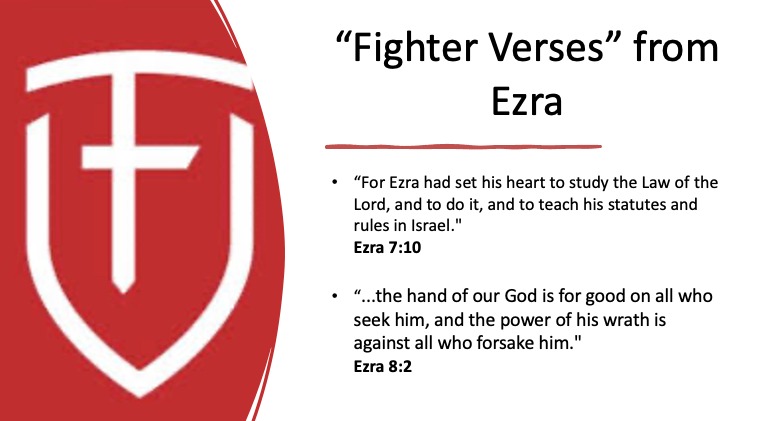
Ezra 1–2
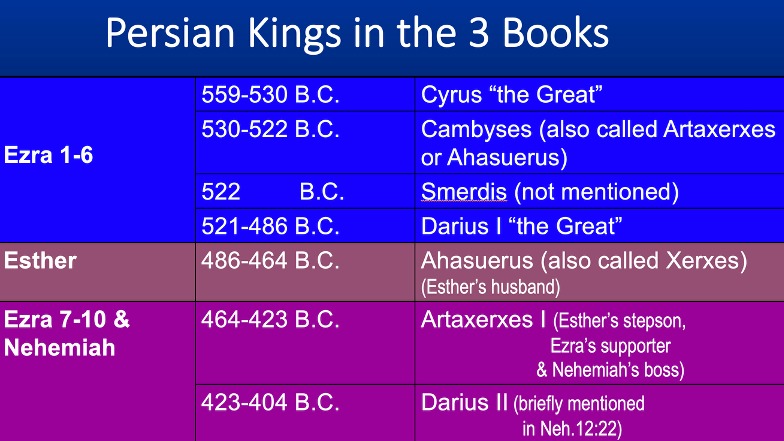
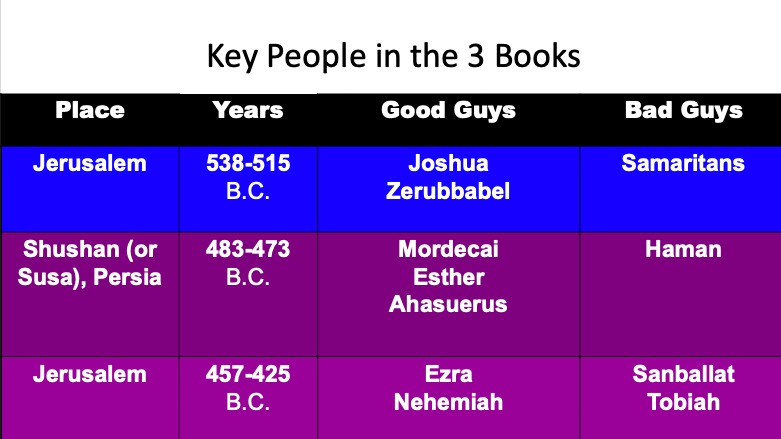
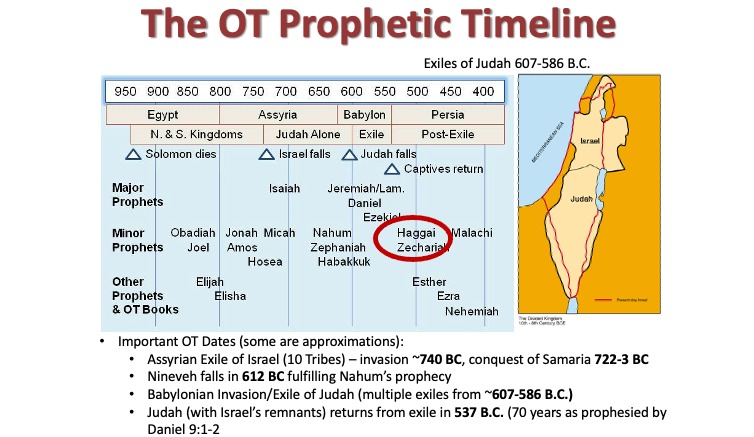
The Book of Ezra has two major parts and actually Ezra himself doesn’t show up until part two. But there are two main parts – chapters 1-6 which detail the return of the exiles and rebuilding of Jerusalem from 539-520 BC. And then almost 80
years later (in between is the book of Esther) on chapters 7-10 we see Ezra finally coming to complete the process a
number of years later followed by Nehemiah in the reign of Artaxerxes to rebuild
the temple and the walls of Jerusalem.
Two things to think about from our reading in chapter 1 today:
- The sovereignty of God over history. Cyrus the king referenced here was named like we heard last night over 100 years before he was born in the book of Isaiah 44. Even before someone is born God has sovereignly ordained purpose - and Cyrus was to be his instrument to bring the Jews back from exile.
- God is a God of sovereign details. That’s what all the dishes are about at the end of this chapter. The detailed “dish inventory” is meant to convey to us that God is serious about restoration and is sovereign over the mundane details of our lives. The return of these dishes is all about the beginning of Daniel (Chapter 1 and again in Chapter 5) when they were stolen from the temple and then desecrated in the first place. God is sovereign and keeps a record. He cares for the lilies of the field and the birds of the air. He keeps an inventory of dishes. And he will make all things right for us who trust in Him. Take comfort this is the God that’s watching over you today!
Ezra 6-7
A thought for today is the wonderful extravagance of God's provision. It sounds cheesy when I say "I'm the richest man in the world", but, no matter what car you drive or what you own or don't own in this world, if you're a Christian it's actually true. You are the son or daughter of the King of Kings. And just look at verse 16 - look at how God for His people.
Ezra -6:9:
(9) And whatever is needed—bulls, rams, or sheep for burnt offerings to the God of heaven, wheat, salt, wine, or oil, as the priests at Jerusalem require—let that be given to them day by day without fail.
God used a pagan king Cyrus and all his resources to pave the way for the exiles to return and rebuild the temple and Jerusalem and give them all the things necessary including the very animals, spices and food to celebrate! Classic Yahweh - what a God we serve!
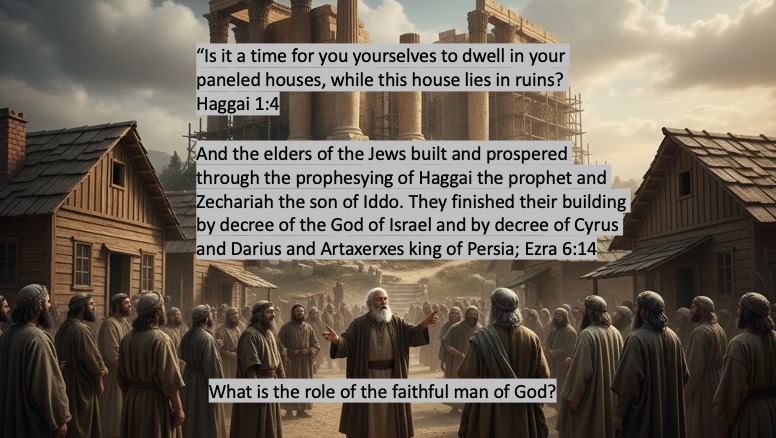
There's also an interesting pattern here in v.14 too that is worthy of our noting.
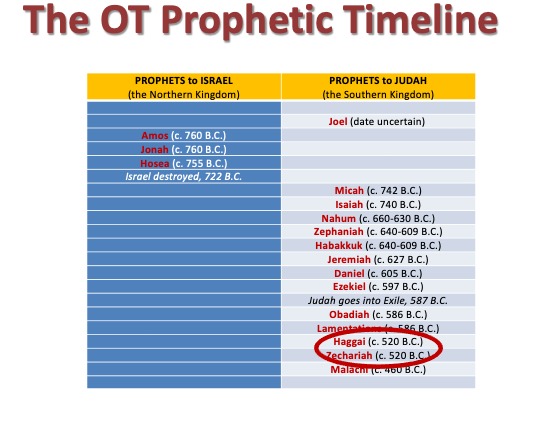
Ezr 6:14 And the elders of the Jews built and prospered through the prophesying of Haggai the prophet and Zechariah the son of Iddo. They finished their building by decree of the God of Israel and by decree of Cyrus and Darius and Artaxerxes king of Persia.
Do you see that? By the decree of God and then secondarily the decree of Cyrus. God is providentially directing the "top man" in the world to accomplish His purposes reminding His people through the Word guiding them by His prophets.
As you labour this week, remember your God is at work behind the scenes to direct His providence and the circumstances of your life for His glory.
May we all rest in His sovereignty and submit our lives and our concerns to Him in prayer and seek His help and direction remembering the principles that Jesus and James told us about God the Father our provider in James 4:2 (you don't have because you don't ask) and Matthew 7:9–11 (how our Father is willing to give what we need).
Ezra 8
Yep, another genealogy. What's up with this one... well, if you blink you might miss another encouragement. God keeps his promises... how? Hattush! Who is he?
Dale Ralph Davis:
The flicker of hope (Ezra 8:2) Note Hattush of the sons of David (see the listing of Davidic/royal descendantsin 1 Chron. 3:17-24). If you scrutinize that list carefully, it seems, as Fenshamsays, that the main thread of the list is: Jehoiachin, Pedaiah, Zerubbabel,Hananiah, Shecaniah, Shemaiah, Hattush. Hattush is then the fourth generationafter Zerubbabel. If Zerubbabel was born ca. 560 B.C., and if one allotsapproximately 25 years per generation, then Hattush appears here about 458B.C., which fits the traditional date of Ezra’s arrival in Jerusalem.Note that the writer does not go ballistic over the presence of a Davidicdescendant here — the emphasis is muted (McConville); but hedoes mentionit/him. “Of the sons of David, Hattush.”
Does this not somewhat parallel Matthew1:12-16, where, during the exilic and post-exilic years, when the sky is often grey and the prospect drab, it is nevertheless clear that the Davidic covenant line keeps going and going? None of them reigns, yet the line continues until it surfaces in Jesus, the son of Mary. So here in Ezra 8, does not the mere mention of Hattush, a son of David, hint that the Davidic covenant, though presently eclipsed, is not dead and buried?
Bottom Line: God no matter how grey and bleak (and wet and snowy) life seems, God hasn't forgotten His promises to His beloved and He is at work to accomplish them. Press on CBC family!
Ezra 9–10
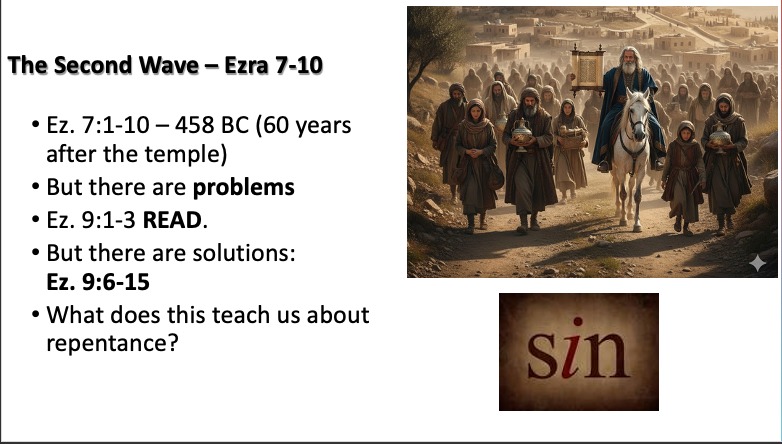
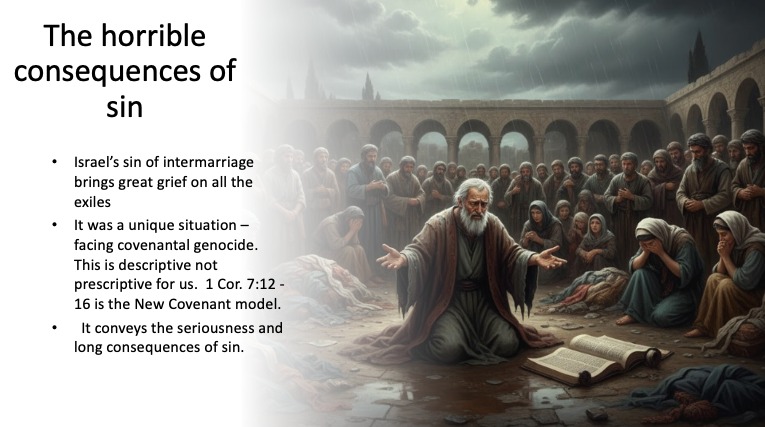
Today we face a challenging and troubling passage that we will confront similarly in Nehemiah "the putting away of foreign wives." I will perhaps touch on this a bit tonight in the study, but, if you're trying to get your head around this you're not alone. This article by Ligonier offers some helpful thoughts but no definitive understanding.
Bottom line: Sin is awful. Whom you marry really really matters. Marrying unbelievers opens up too many problems. Pray for our single folks to make good decisions and to find godly partners. Pray for our married couples to find ways to support and encourage each other's spiritual growth. Husbands, take your wife out on a date and talk with her about her soul and your soul and how you can assist each other in serving the Lord better together and as a family. Wives (and husbands) look for ways to build up your family spiritually through love and service.
Nehemiah 1–3
As we begin "Ezra pt.2" something to observe and act upon in our devotions today:
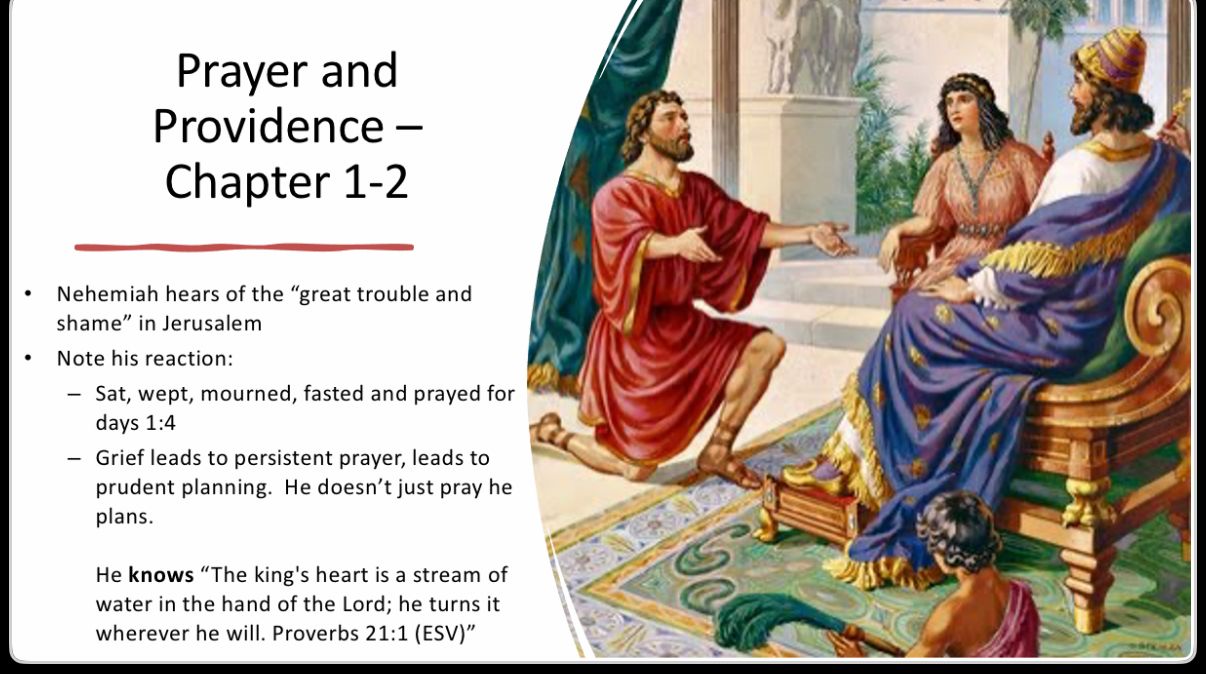
Just like in Ezra where prayers of repentance were accompanied by active repentance, here we have Nehemiah receiving sad news in chapter 1 but he is not immobilized by his grief. In fact he is mobilized by it to pray and to plan, so that when he gets permission from the king he's ready with his "home depot" orders to get moving. This asks us the question - do our circumstances motivate us to prayer and to preparatory action. We will only do these things if we believe that God will answer our prayers. May God increase and give us faith to pray and to act even in the face of jeering opponents like Sanballat and Tobias (chapter 3).
Nehemiah 8
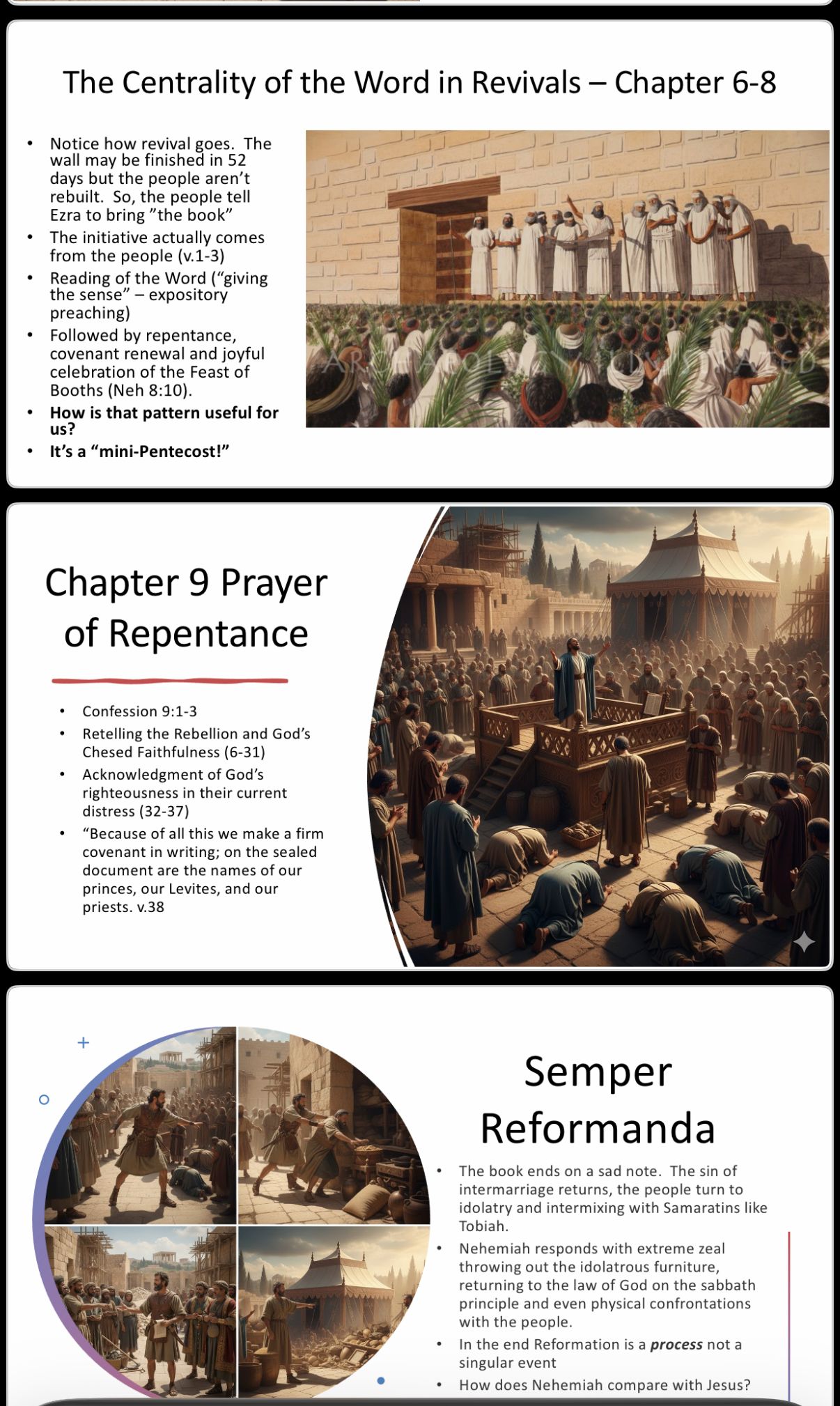
This is one of those simple beautiful passages that tell us what role the Word of God has in the life of believers. Here as the exiles restore worship, they return to the basic "Sola Scriptura" concept - returning to the Word of God to live and direct their life by. So Israel gathers to hear the Word read. But note that it's not a ritual reading of the word of God, but, an engagement with it's meaning and teaching. The Levites here model what today we call "expository preaching" in that they "give the sense" of the text and not just read it so that people can understand v.8 "They read from the book, from the Law of God, clearly, and they gave the sense, so that the people understood the reading." This speaks to the purpose of reading the Bible. As Pastor Leigh used to say over and over "Why do we read the Bible? We read the Bible for a change" As we go through this reading plan together my prayer for us all is that it will by the power of the Holy Spirit change us as He applies it to our conscience. And if there are ways I can help you understand it better, feel free to ask, it is my joy to help if I can and find out with you together if I don't already know. And if there's something in the preaching that you have questions about - please ask. This is how we help each other grow. Sanctification is a corporate church wide project and it begins with "kononia" fellowship around the Word of God. Have a lovely day everyone and may the Lord give you encouragement and hope in His Word.
We are blessed to have preachers that stick to expository preaching just like Ezra and the Levites who helped the people understand the Law!
Nehemiah 9-10
One thing struck me today as I read the passage. There was no. holding. back. in their acknowledgment of sin. Do you notice how defensive we often are when we acknowledge sin? I don't know about you but when it comes to acknowledging my sin I'm a pretty good lawyer and I'm sadly decent at sinfully spinning things my way. There is none of that here. Nehemiah 9 is a sad chapter, but, it's also beautiful in its painful honesty. Because it shows what repentance looks like. A full accounting of sin without leaving anything out and an exoneration of God as judge. How quick we are to judge God's judgment, when it's clear by the evidence in our lives that we are so sinful. But here the Israelites are repentant. At least in the moment. The sad thing is we still have Nehemiah 13 and even Nehemiah 13:15 where the last thing the people commit to in the last verse of chapter 10 is exactly what they don't do.
What do we make of this? Well, first, know the perniciousness of your sin. That you can actually sin in your confession of sin! I.e. by attempting to deceive. Of course it's foolish, God sees the heart, He knows. But you can repent and still return to the broken cistern. How stupid sin is and how stupid we can be. May God have mercy on us. May we learn to hate sin and to make it our enemy and draw closer to Christ and godly friends. Thank God for His amazing grace!